Oriental Mindoro is highly vulnerable to natural hazards like tropical cyclones, earthquakes, tsunamis, and floods. Flash floods, especially those caused by typhoons and heavy rains, are common in the region, with rivers like Bucayao and Mag-asawang Tubig posing significant risks, particularly in Calapan City, Naujan, and Victoria. About 85 barangays in the province are highly prone to flooding.
To strengthen disaster preparedness and enhance weather monitoring in the province, in 2023, Mindoro State University (MinSU) initiated a new project aimed at improving weather monitoring and disaster preparedness in Oriental Mindoro. The project, titled Strengthening Weather Monitoring System Through Hydrologic Response Modeling in Mag-Asawang Tubig Watershed led by Engr. Christian Hernandez is a 24-month initiative with a budget of Php 2,587,800 funded by DOST-MIMAROPA.
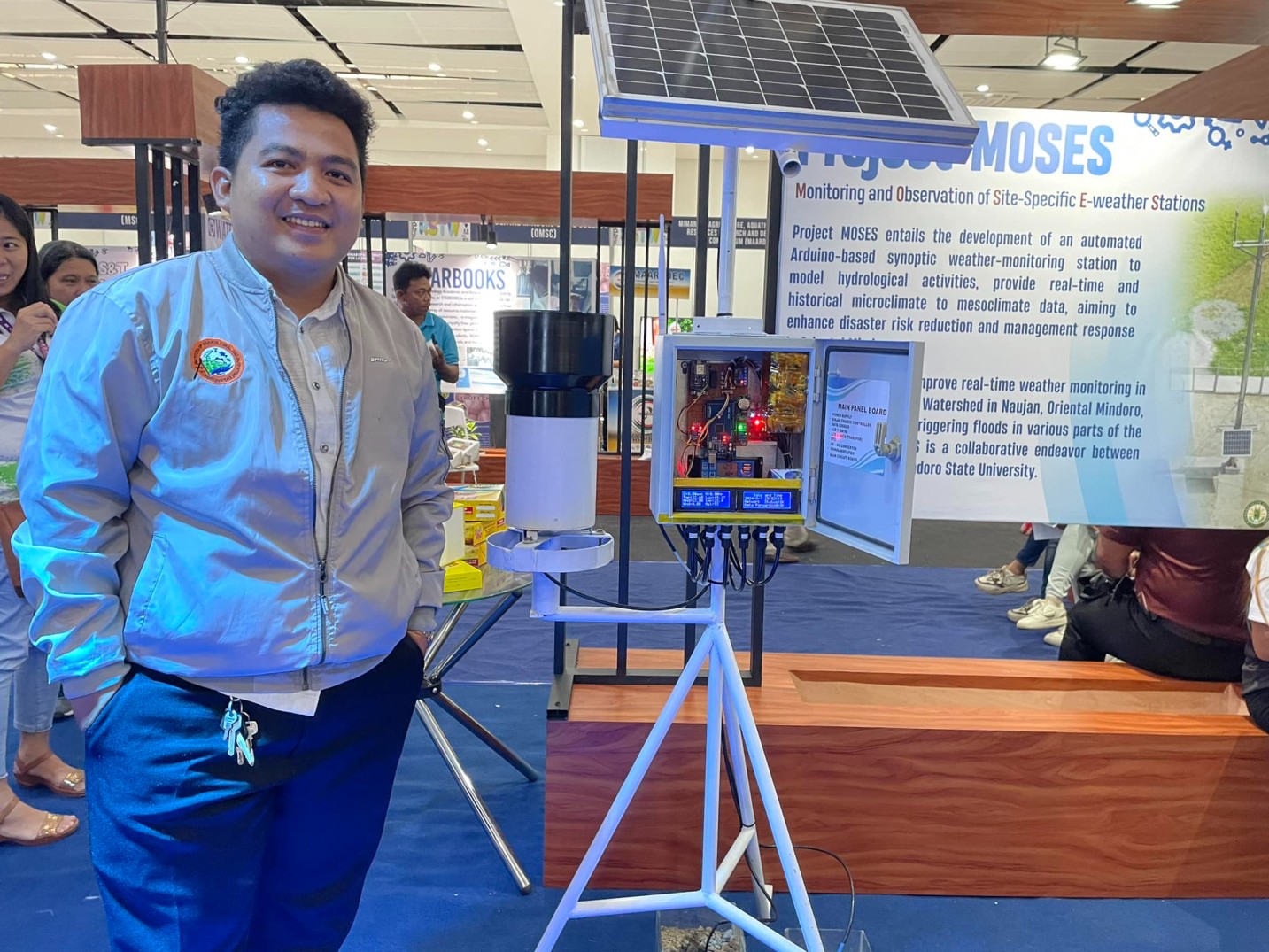
The goal of the project is to enhance real-time weather monitoring in the Mag-asawang Tubig watershed. It includes a suitability analysis to identify the best locations for weather stations, the development of Arduino-based weather stations, and an evaluation of hydrologic responses in the watershed.
As part of the project, MinSU launched the Project MOSES (Monitoring of Site-Specific E-weather Stations) on May 7, 2024 during the DOST-MIMAROPA’s Regional Science and Technology Week. Project MOSES utilizes an Internet of Things (IoT)-based system that covers a 9-25 km radius, providing near-real-time data on atmospheric and soil conditions. The data generated will assist the Philippine Atmospheric, Geophysical and Astronomical Services Administration (PAG-ASA) in delivering more precise weather forecasts, which in turn will aid local disaster management offices in preparing for and responding to natural hazards.
The real-time weather data generated by Project MOSES is also accessible to local communities through their mobile phones, further enhancing public safety and awareness.
Project MOSES is expected to make a significant contribution to local stakeholders, including the Municipal Disaster Risk Reduction and Management Offices (MDRRMOs) of Victoria and Naujan, by providing weather data for informed decision-making and urgent responses during weather events. Additionally, the project will offer valuable support to agricultural activities in the province by providing timely weather information to aid farming decisions. MinSU students will also have access to real-time weather data for research and laboratory work, enhancing their educational experience and contributing to scientific advancements in the province.
With its focus on accurate weather data and disaster preparedness, the project is set to make a significant impact on the safety and quality of life in Oriental Mindoro.